"We have to ask for permission from the Ministry of Defense when we enter this machine because it can make weapons. Now want to move the location of the machine a little, then also need to make official dispatch permission. With it, we just leave the raw material and press the button to have the gun ready tomorrow. "
This is the introduction of Mr. Nguyen Vuong Long - Deputy General Director of Vietnam Precision Industry Company (VPIC) about the modern machine in a "special" occasion for strangers to visit.
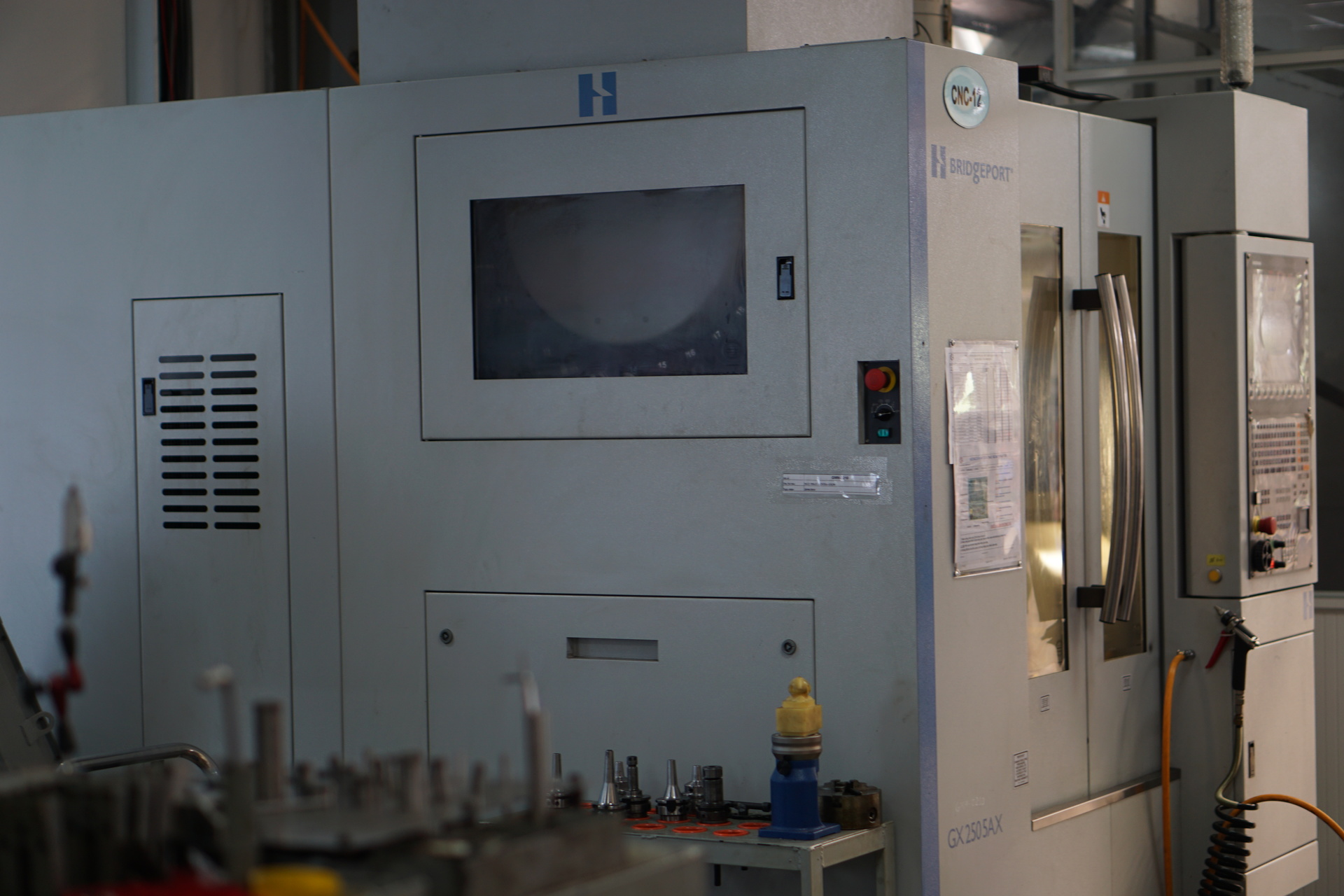
The machine is a half-car 16 seats with 40 machines inside, fully automatic operation by computer software. Long said the machine not only created a model that produced real guns. Just add a few extra parts and the bullets can ... shoot.
VPIC entered the modeling machine, of course, not to make a gun. Few know that the company is a supplier of chassis for two of the world's leading motorcycles, Ducati and Harley Davidson.
"Harley is a brand that has never taken any of its production from the United States. However, there are currently two units in Myanmar and Vietnam that receive that privilege. And we are one of two, "said Long, proudly.
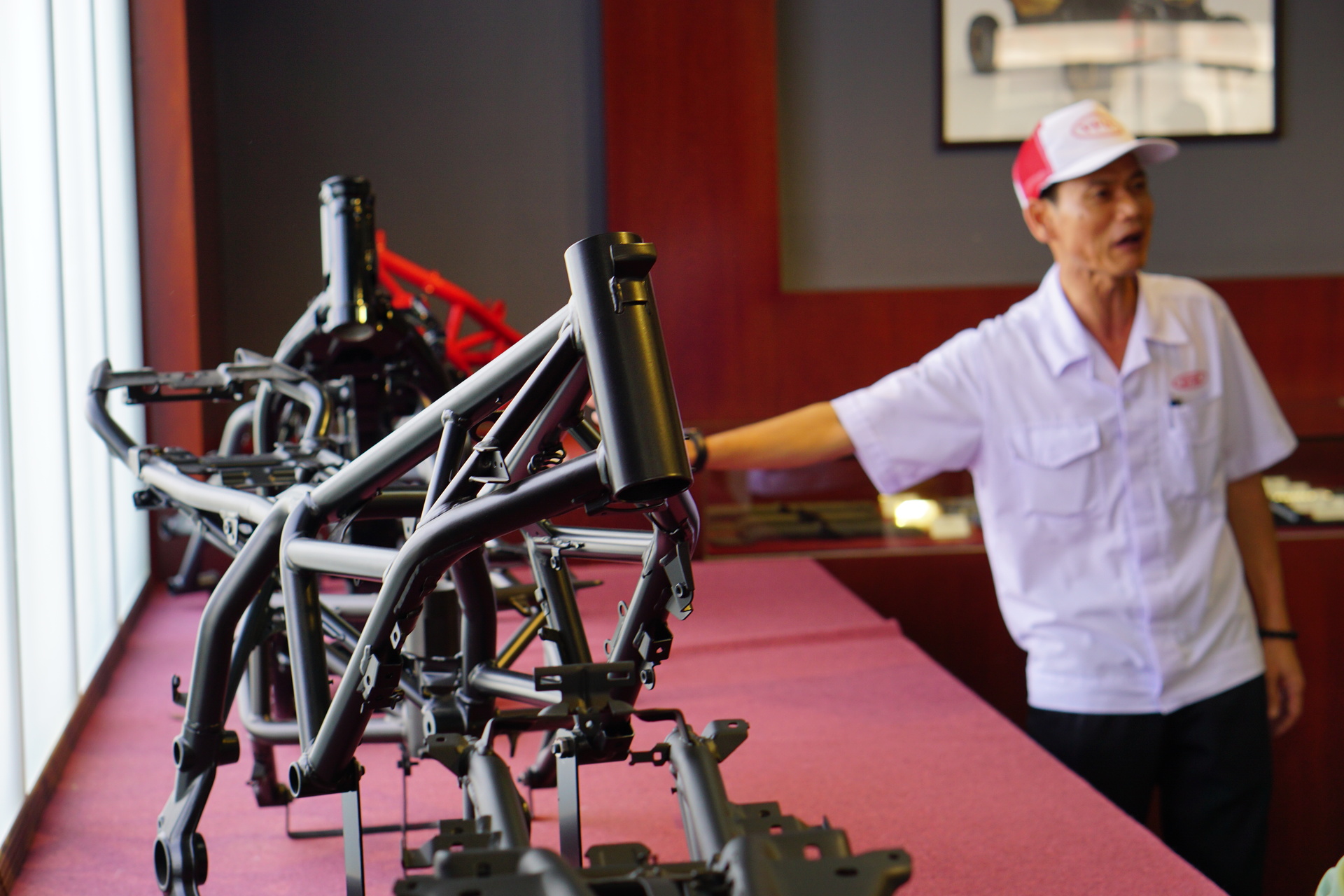
The frame of the Ducati is displayed as a pride of the factory.
Intelligent Manufacturing with automation platform is the key driver of the Industrial Revolution 4.0. According to estimates by Oxford University, up to 47% of today's work will have a 75% automation rate over the next 20 years.
More than 90% of the employees at VPIC are Vietnamese. They were evaluated by Mr. Long as having undergone training and advanced skills thoroughly. The company's impressive automation capabilities come from a fairly straightforward reason. This is a 100% Taiwanese (Chinese) company. In the field of mechanics, the Taiwanese FDI business sector is more responsive than domestic firms to move towards a new industry.
"Industrial Revolution 4.0 is being paid attention not only to the Government of Vietnam or to the world we want to develop ourselves to follow. However, it is not all. Depending on the process, the level and value of the product that we use accordingly, "Long said.
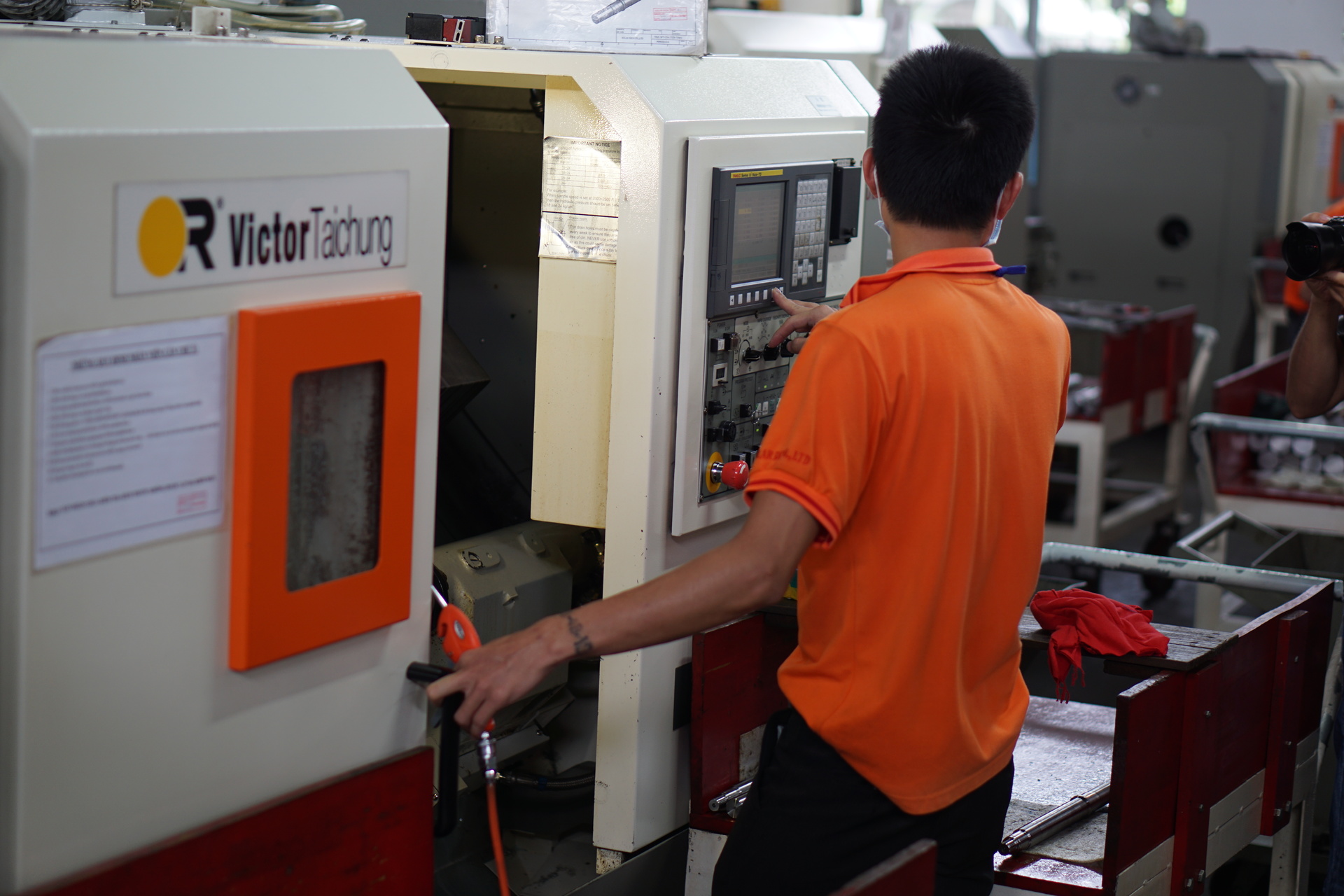
"Automation" is a phrase often referred to by Solar Rich's leadership when he brings a reporter to visit the factory.
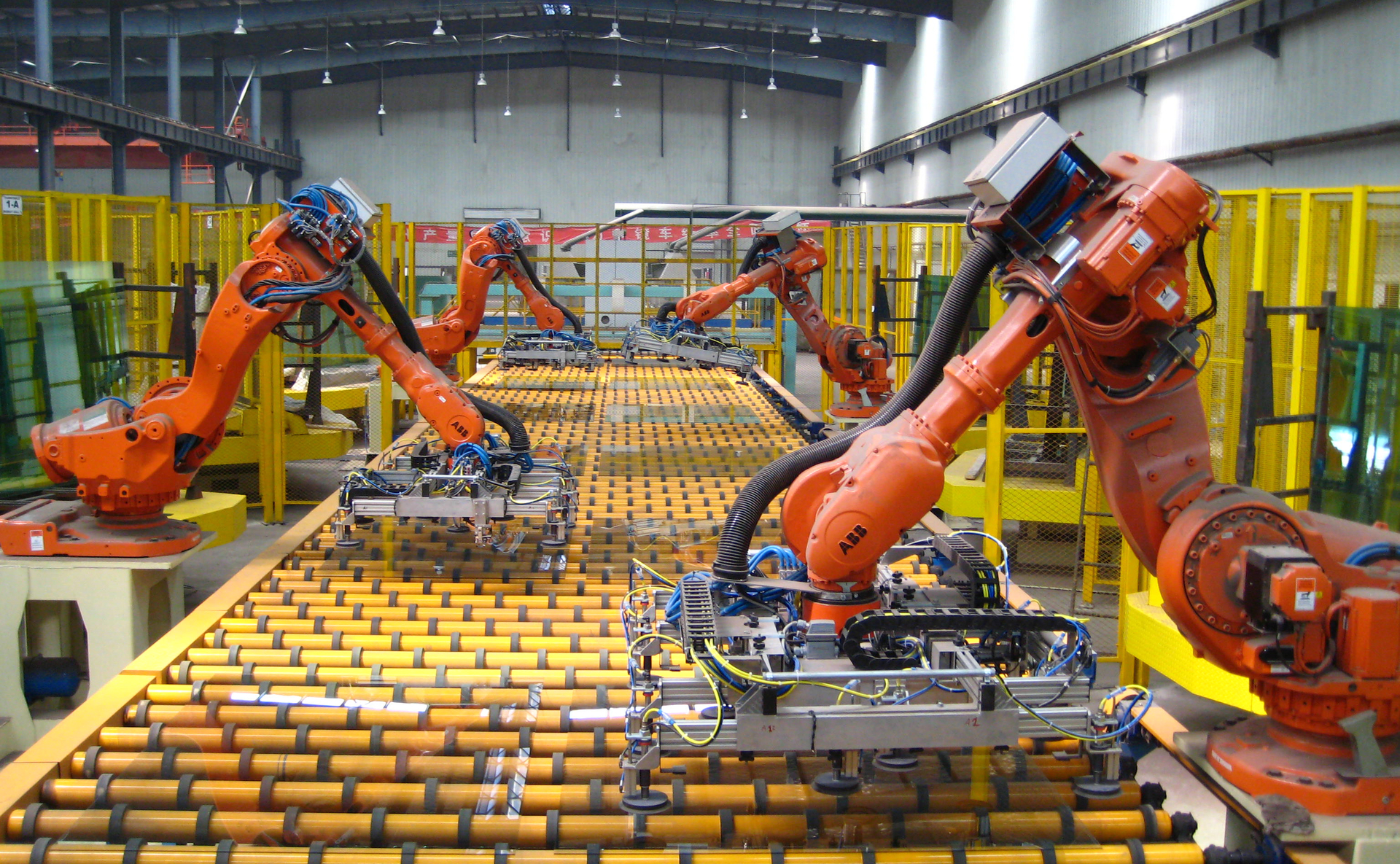
ABB robots are becoming more and more familiar in big factories of Vietnamese companies.
Robot in Hyundai Motor Factory. Photo: Reuters
Thao said that there are many challenges for domestic engineering enterprises to advance to the top technology level.
The machine is a half-car 16 seats with 40 machines inside, fully automatic operation by computer software. Long said the machine not only created a model that produced real guns. Just add a few extra parts and the bullets can ... shoot.
VPIC entered the modeling machine, of course, not to make a gun. Few know that the company is a supplier of chassis for two of the world's leading motorcycles, Ducati and Harley Davidson.
"Harley is a brand that has never taken any of its production from the United States. However, there are currently two units in Myanmar and Vietnam that receive that privilege. And we are one of two, "said Long, proudly.
The frame of the Ducati is displayed as a pride of the factory.
85% of the company's customers come from the top names in the US, Canada, Japan and Europe. In addition to the two leading motorcycle manufacturers, this unit is also a supplier of Yamaha, Honda, SYM, Suzuki, Toshiba ...
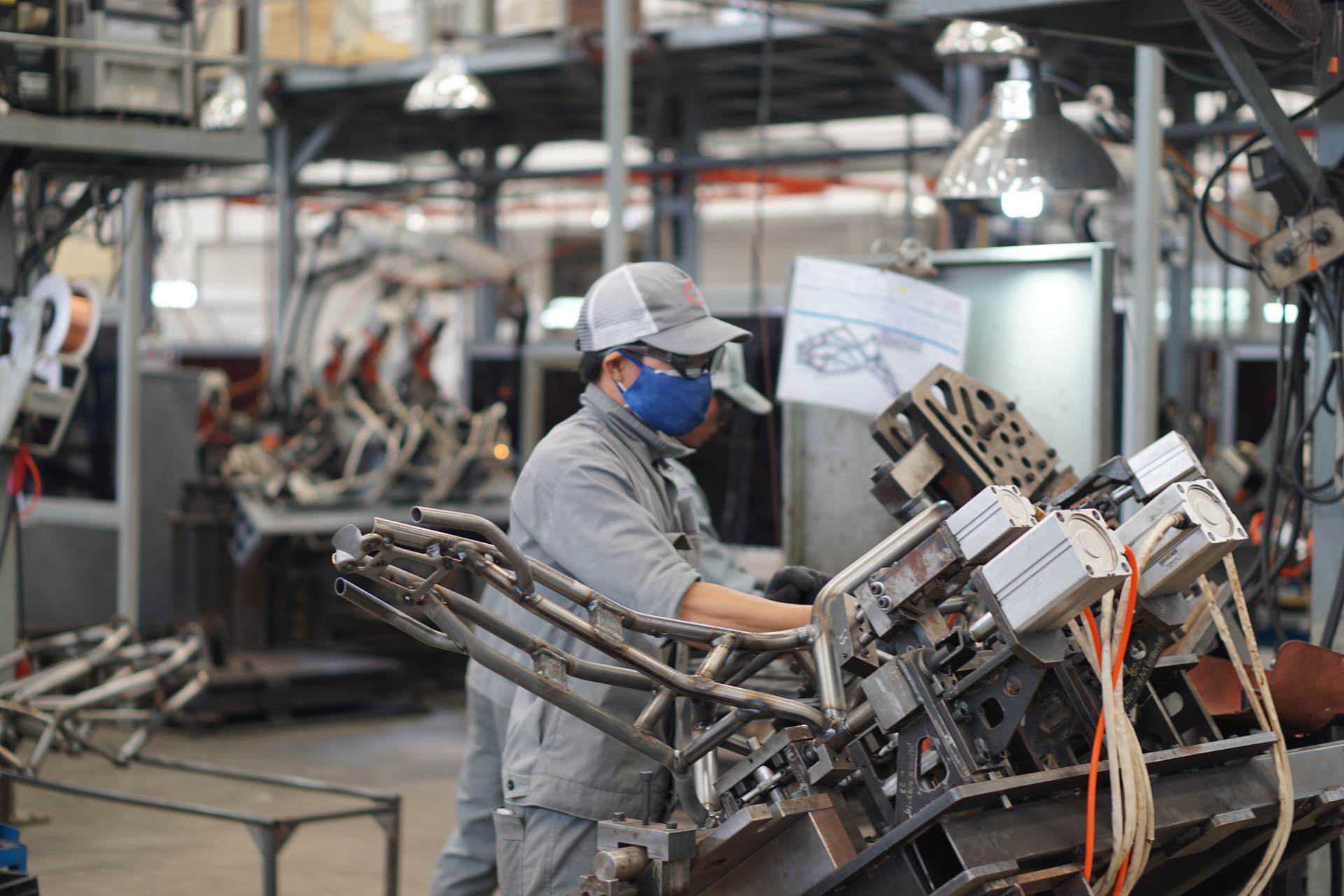
"This chain requires very few workers" is the saying that Mr. Long repeated frequently when leading people to visit. At the welding line, a worker manages two robots. In a mold workshop, one person can operate 10 machines. On the CNC line, a worker runs four machines at the same time, and more complex products run two machines.
"This powder coating line has 333 hangers. Just hanging up my product alone is enough. If the product is bigger, it should be up to two people, "said a male worker quietly working in a large space at a corner of the workshop.
Different from the "traditional" thinking of mechanical workers sweating, greasy oil. All the workers here are clean without any stains. They even have bright skin, wear gloves carefully. The main job of the majority is to control the computer, observe robots or do simple things such as putting the embryos in and getting finished products when the machines are finished.
The 205,000 m2 factory in Giang Dien Industrial Zone (Trang Bom, Dong Nai) of VPIC has a total of 600 employees, including office blocks. Workers also do shifts. The factory is always quiet, sparse, clean and almost without significant odor. The shadow of 4.0 industry gradually appeared when Mr. Long declared: "Here the working machinery is the only people to supervise and control."
"This chain requires very few workers" is the saying that Mr. Long repeated frequently when leading people to visit. At the welding line, a worker manages two robots. In a mold workshop, one person can operate 10 machines. On the CNC line, a worker runs four machines at the same time, and more complex products run two machines.
"This powder coating line has 333 hangers. Just hanging up my product alone is enough. If the product is bigger, it should be up to two people, "said a male worker quietly working in a large space at a corner of the workshop.
Different from the "traditional" thinking of mechanical workers sweating, greasy oil. All the workers here are clean without any stains. They even have bright skin, wear gloves carefully. The main job of the majority is to control the computer, observe robots or do simple things such as putting the embryos in and getting finished products when the machines are finished.
The 205,000 m2 factory in Giang Dien Industrial Zone (Trang Bom, Dong Nai) of VPIC has a total of 600 employees, including office blocks. Workers also do shifts. The factory is always quiet, sparse, clean and almost without significant odor. The shadow of 4.0 industry gradually appeared when Mr. Long declared: "Here the working machinery is the only people to supervise and control."
Intelligent Manufacturing with automation platform is the key driver of the Industrial Revolution 4.0. According to estimates by Oxford University, up to 47% of today's work will have a 75% automation rate over the next 20 years.
More than 90% of the employees at VPIC are Vietnamese. They were evaluated by Mr. Long as having undergone training and advanced skills thoroughly. The company's impressive automation capabilities come from a fairly straightforward reason. This is a 100% Taiwanese (Chinese) company. In the field of mechanics, the Taiwanese FDI business sector is more responsive than domestic firms to move towards a new industry.
"Industrial Revolution 4.0 is being paid attention not only to the Government of Vietnam or to the world we want to develop ourselves to follow. However, it is not all. Depending on the process, the level and value of the product that we use accordingly, "Long said.
"Automation" is a phrase often referred to by Solar Rich's leadership when he brings a reporter to visit the factory.
However, the example of the mechanical industry does not mean that the insiders are about to reach 4.0. Ngo Minh Triet - General Director of Solar Rich, specializing in engine design and manufacturing, said that this unit has two groups of customers.
One is the large foreign corporations investing in Vietnam such as Toshiba motor, Foxconn, Sumitomo, Honda, Yamaha, Samsung, Sanyo, Canon, Brother ... The two are domestic firms in construction, Consumers, agricultural machines, training ... Both of these customers are fertile markets, hard to invest in new generations of automation with high levels of automation.
Viet Thang Co., the distributor of imported machine tools, said that if the level of automation of mechanical engineering businesses is low, in other industries, especially Consumer goods or light industry is not short of examples such as Duy Tan Plastic or Stainleass Steel ....
One is the large foreign corporations investing in Vietnam such as Toshiba motor, Foxconn, Sumitomo, Honda, Yamaha, Samsung, Sanyo, Canon, Brother ... The two are domestic firms in construction, Consumers, agricultural machines, training ... Both of these customers are fertile markets, hard to invest in new generations of automation with high levels of automation.
Viet Thang Co., the distributor of imported machine tools, said that if the level of automation of mechanical engineering businesses is low, in other industries, especially Consumer goods or light industry is not short of examples such as Duy Tan Plastic or Stainleass Steel ....
ABB robots are becoming more and more familiar in big factories of Vietnamese companies.
At some domestic plants, the silhouette of the ABB robot - a Swiss brand - was no stranger. This robot is responsible for loading and unloading beer for beverage delivery at Hanoi Brewery Company, Viet Ha Brewery and Hue Brewery. Hai Ha Motorcycle Factory, Huu Toan Generator Factory, Hong Thinh Electric Panel Manufacture Factory, ABB welding machine.
In the field of information technology, the 4.0 Industrial Revolution began to emerge with the application of intelligent urbanization. Mr. Lam Nguyen Hai Long - Director of Quang Trung Software City (QTSC) said that many intelligent urban automation applications have been prepared and deployed widely in this park. Examples include smart find and parking systems, person recognition, automatic lighting, and more.
In November, the Government began assigning the Ministry of Science and Technology to act as a focal point in coordinating with other ministries to study and evaluate the current status of the Industrial Revolution 4.0. It is expected that by the end of this year, the Government agencies will re-evaluate the situation and guide the revolution.
By the way, about 1,500 km, or about 3 hours flying, the Taiwanese Industrial Revolution 4.0 (China) is not just as good as what some of the businesses in the country have deployed in Vietnam.
A program of action called the Productivity 4.0 Development Program aims to support the machine tool industry involved in the production of spatial details and accessories approved by Taiwan. This program reinforces the value chain of smart manufacturing, mechanical products and services for the aviation industry to reach $ 5,200 billion.
The Precision Machinery Research Development Center (PMC) connects fou
Revolution 4.0 is also a hot topic in Korea. The new government of President Moon Jae-in has come up with the pursuit of it as a major agenda. Earlier, during the campaign, Moon stressed that the new government would implement policies in support of this revolution, doubling its budget for scientific research by 2020.
In the field of information technology, the 4.0 Industrial Revolution began to emerge with the application of intelligent urbanization. Mr. Lam Nguyen Hai Long - Director of Quang Trung Software City (QTSC) said that many intelligent urban automation applications have been prepared and deployed widely in this park. Examples include smart find and parking systems, person recognition, automatic lighting, and more.
In November, the Government began assigning the Ministry of Science and Technology to act as a focal point in coordinating with other ministries to study and evaluate the current status of the Industrial Revolution 4.0. It is expected that by the end of this year, the Government agencies will re-evaluate the situation and guide the revolution.
By the way, about 1,500 km, or about 3 hours flying, the Taiwanese Industrial Revolution 4.0 (China) is not just as good as what some of the businesses in the country have deployed in Vietnam.
A program of action called the Productivity 4.0 Development Program aims to support the machine tool industry involved in the production of spatial details and accessories approved by Taiwan. This program reinforces the value chain of smart manufacturing, mechanical products and services for the aviation industry to reach $ 5,200 billion.
The Precision Machinery Research Development Center (PMC) connects fou
Revolution 4.0 is also a hot topic in Korea. The new government of President Moon Jae-in has come up with the pursuit of it as a major agenda. Earlier, during the campaign, Moon stressed that the new government would implement policies in support of this revolution, doubling its budget for scientific research by 2020.
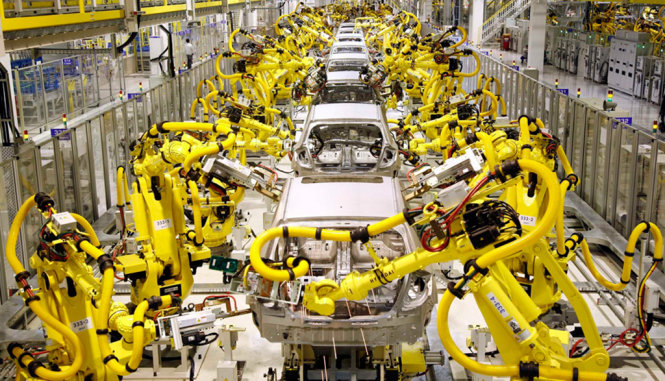
Robot in Hyundai Motor Factory. Photo: Reuters
Intelligent Manufacturing with automation platform is the key driver of the Industrial Revolution 4.0. According to estimates by Oxford University, up to 47% of today's work will have a 75% automation rate over the next 20 years. Reuters
Meanwhile, China's automation level is on the rise. China produced 72,400 industrial robots last year, up 34.3 percent from 2015. According to the International Data Group (IDC), the country will continue to be the largest robot market and increase The fastest growth in the world. By 2020, China will invest about $ 54.9 billion in the robotics and related services industry, accounting for over 30 percent of global investment in the sector.
The 2016 World Economic Forum's future career forecast predicts that a "typhoon" of 4.0 will cause labor demand in manufacturing, manufacturing, computing - mathematics, architecture and engineering sectors. The decline of the ASEAN region.
Many predictions are consistent, FDI from other countries and territories will continue to flow into Vietnam. The government is gradually tightening the requirements of the environment and technological level of investors. Objectively, the businesses of the Industrial Revolution 4.0 in Vietnam themselves have chosen the path of automation.
These two factors mean that job opportunities for workers will be harder and more demanding. A recent report by the International Labor Organization (ILO) predicts that robots will replace 85 percent of workers in the Vietnamese textile and garment industry in the coming decades.
With employers, not everyone is capable of overcoming the challenges that have been repeatedly discussed on forums to reap success from this trend.
Meanwhile, China's automation level is on the rise. China produced 72,400 industrial robots last year, up 34.3 percent from 2015. According to the International Data Group (IDC), the country will continue to be the largest robot market and increase The fastest growth in the world. By 2020, China will invest about $ 54.9 billion in the robotics and related services industry, accounting for over 30 percent of global investment in the sector.
The 2016 World Economic Forum's future career forecast predicts that a "typhoon" of 4.0 will cause labor demand in manufacturing, manufacturing, computing - mathematics, architecture and engineering sectors. The decline of the ASEAN region.
Many predictions are consistent, FDI from other countries and territories will continue to flow into Vietnam. The government is gradually tightening the requirements of the environment and technological level of investors. Objectively, the businesses of the Industrial Revolution 4.0 in Vietnam themselves have chosen the path of automation.
These two factors mean that job opportunities for workers will be harder and more demanding. A recent report by the International Labor Organization (ILO) predicts that robots will replace 85 percent of workers in the Vietnamese textile and garment industry in the coming decades.
With employers, not everyone is capable of overcoming the challenges that have been repeatedly discussed on forums to reap success from this trend.
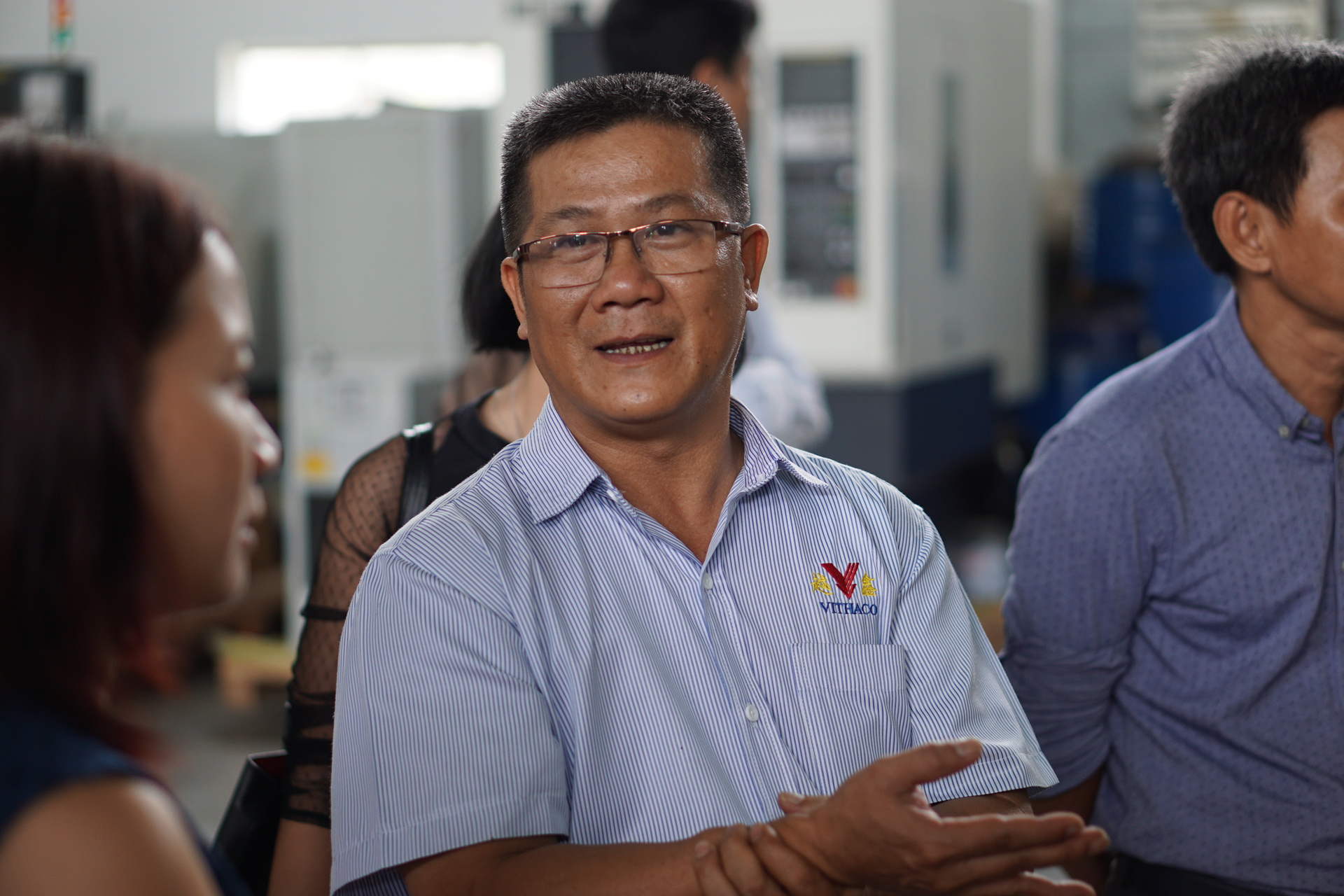
Thao said that there are many challenges for domestic engineering enterprises to advance to the top technology level.
"The technical level and professionalism of the business is not high so the reliability to receive large orders from foreign countries is not much. We still have some big problems such as poor working knowledge and industrial working style. The support for loans is very low. Businesses may be subject to interest rate pressure of up to 22% per annum. So, businesses that have the words to worry about paying the first loan interest. Enterprises are very large and have long-term plans to be stable, not to lose, "Thao said.
Viễn Thông - VNEXPRESS.NET