Parking seems to be the most 'boring' prelude in the world. Even planners - people interested in zoning and land use coefficients - feel daunted when thinking about it. However, parking affects the appearance of cities and congestion is stronger than any other factor.
The decisive factor in the face of the city
Many cities try to make them more attractive by building bike paths, trams or building massive buildings designed by famous architects. But if the heads of these cities do not change their parking policy, such efforts are no different than "showcases in the showroom" - nice but not useful. There is a word that makes the streets of LA very different from London, and in Tokyo: the parking lot.
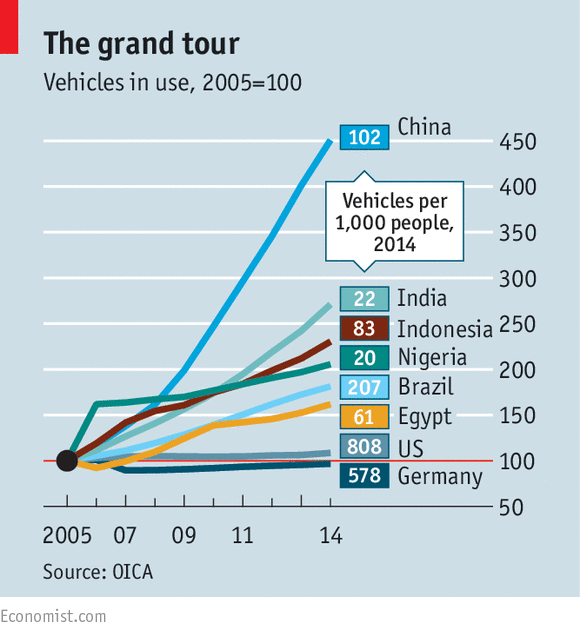
As long as there are also cars, space is needed to park them when they are not moving - about 95% of the time. Washington DC. There was a garage built in 1907, even before Ford produced the first Model T. But the most important innovation was in 1923 when Columbus, Ohio, began to emphasize that the owners of the apartments had to build parking lots for the people living in the apartments. The "minimum parking" has since then gradually spread throughout the United States. Now, the number of cars traveling on roads in countries around the world is increasing.
Số phương tiện trên 1000 dân của một số quốc gia trên thế giới 2005 – 2014 (Nguồn: OICA)
The problem of parking is free
There is an unwritten rule that the more personal vehicles, the higher the chance of a traffic jam. And free parking is one of the reasons that people are more motivated to use the car while on the road. These free parking lots also have many problems.
In 2004, London abolished the minimum parking requirements. Research by Zhan Guo of New York University shows that the number of parking spaces for new properties fell sharply, from an average of 1.1 parking spaces per household to 0.6. The minimum parking level provided exceeds the market demand.
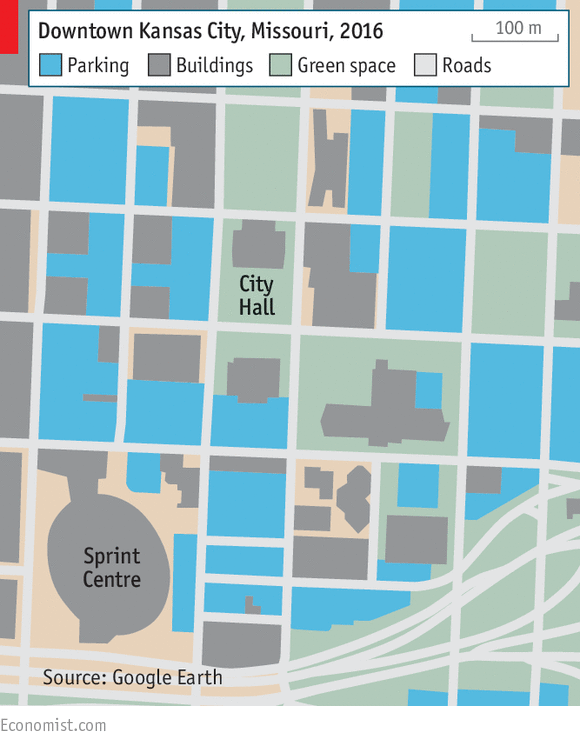
In addition, parking lots take up a lot of space. The average area of a parking space is 12 - 15m2; Adding necessary paths and space for each car, this area doubled. For comparison, The Economist magazine will move into a summer building in central London with the plan that every employee will have 10m2 to park. In cities like Kansas where land prices are cheap, and standard parking lots in the downtown area are interspersed with buildings, green spaces and commuter routes.
There is an unwritten rule that the more personal vehicles, the higher the chance of a traffic jam. And free parking is one of the reasons that people are more motivated to use the car while on the road. These free parking lots also have many problems.
In 2004, London abolished the minimum parking requirements. Research by Zhan Guo of New York University shows that the number of parking spaces for new properties fell sharply, from an average of 1.1 parking spaces per household to 0.6. The minimum parking level provided exceeds the market demand.
In addition, parking lots take up a lot of space. The average area of a parking space is 12 - 15m2; Adding necessary paths and space for each car, this area doubled. For comparison, The Economist magazine will move into a summer building in central London with the plan that every employee will have 10m2 to park. In cities like Kansas where land prices are cheap, and standard parking lots in the downtown area are interspersed with buildings, green spaces and commuter routes.
Bản đồ trung tâm thành phố Kansas (Nguồn: The Economist)
Another disadvantage of free parking is that walking and biking are less attractive. If you could park your car anywhere, what would you do without driving anywhere? According to David King of Arizona State University, US free parking is one of the reasons why investments in public transport have failed to entice people to stop using cars. personal. In 1990, according to a census, 73% of Americans drove alone to work. Twenty-four years later, with a series of urban revival ad campaigns, along with fast and expensive tram and bus routes, this number ... increased to 76%. Increased automobile traffic on the road leads to bad impacts on the environment and traffic congestion.
Parking requirements can make redevelopment impossible. Changing an old office building to a home often means having to provide adequate parking space for that apartment, which is very difficult.
People using free parking spaces do not mean that they do not cost a cent to build or maintain them: construction, sanitation, lighting, repair and protection costs. The general rule in the United States is that multi-storey car parks cost about $ 25,000 / car park, and $ 35,000 below the basement. Donald Shoup, an economist with parking lots, estimates that the creation of a minimum parking space would increase 67% of the cost of a new shopping center in LA if it was on the ground and 93% % If it is in the basement.
Who pays for these expenses? The users of the buildings attached to these parking lots. That means that meals at the restaurant and movie tickets will be more expensive, older homes more expensive, and office workers may be paid less. Whether or not to ride, everyone has to pay. Consequently, there is an uneven distribution of costs, as young people drive less than middle-aged and the poor drive less than the rich. In the United States, 17% of blacks and 12% of Latinos live in big cities using public transportation to work, with whites being 7%.
National solutions: Parking charges
Parking requirements can make redevelopment impossible. Changing an old office building to a home often means having to provide adequate parking space for that apartment, which is very difficult.
People using free parking spaces do not mean that they do not cost a cent to build or maintain them: construction, sanitation, lighting, repair and protection costs. The general rule in the United States is that multi-storey car parks cost about $ 25,000 / car park, and $ 35,000 below the basement. Donald Shoup, an economist with parking lots, estimates that the creation of a minimum parking space would increase 67% of the cost of a new shopping center in LA if it was on the ground and 93% % If it is in the basement.
Who pays for these expenses? The users of the buildings attached to these parking lots. That means that meals at the restaurant and movie tickets will be more expensive, older homes more expensive, and office workers may be paid less. Whether or not to ride, everyone has to pay. Consequently, there is an uneven distribution of costs, as young people drive less than middle-aged and the poor drive less than the rich. In the United States, 17% of blacks and 12% of Latinos live in big cities using public transportation to work, with whites being 7%.
National solutions: Parking charges
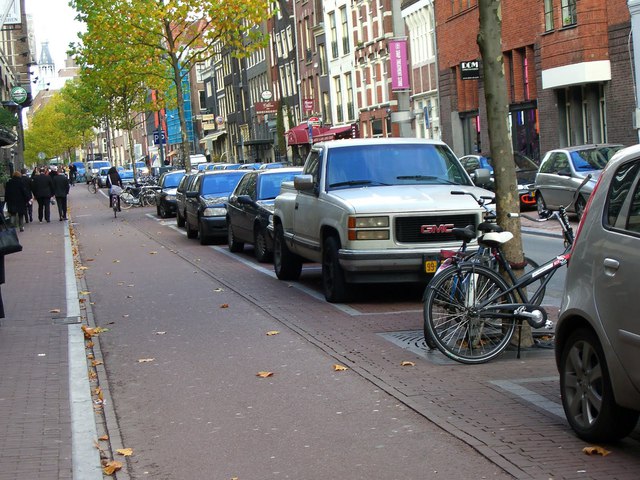
In addition to solutions such as excellent quality of public transport, car sharing services, the simplest option is to charge a parking fee.
Amsterdam charges $ 5.3 / hour for parking on the street. You can also park your car in the basement of the office buildings or in the spacious, clean garages of the city. Drivers have many options and the city has made a lot of money - 190 million euros by 2015.
In addition, anyone with a house in Amsterdam without a private car park has the right to purchase a parking permit near the house for 30 to 535 Euro per year. This is a good deal so do not be surprised if the number of people who register is over the parking lot. Consequently, many people are on the waiting list. Suburban car parking holders are reimbursed for a portion of the annual fee and many have accepted the offer.
Most of London's inner city is the parking area of the people. The license is even cheaper in Amsterdam: Kensington and Chelsea charge between € 94 and € 258 per year for the right to park anywhere in and around Westminster. Those who need to pay from 1.4 to 5.4 Euro / h.
Being freed from the car, the streets in Tokyo are quieter than in other cities. Each small yard or vacant lot turned into a parking lot with different parking rates. Takaomi Kondoh, a company that manages buildings and parking lots, explains that parking rates are often higher in transit centers, as people go to work fighting those spaces. Near the central station in Tama, a suburb, parking rates are $ 150 per month, a 10-minute walk away, this price drops to about $ 88.
Amsterdam charges $ 5.3 / hour for parking on the street. You can also park your car in the basement of the office buildings or in the spacious, clean garages of the city. Drivers have many options and the city has made a lot of money - 190 million euros by 2015.
In addition, anyone with a house in Amsterdam without a private car park has the right to purchase a parking permit near the house for 30 to 535 Euro per year. This is a good deal so do not be surprised if the number of people who register is over the parking lot. Consequently, many people are on the waiting list. Suburban car parking holders are reimbursed for a portion of the annual fee and many have accepted the offer.
Most of London's inner city is the parking area of the people. The license is even cheaper in Amsterdam: Kensington and Chelsea charge between € 94 and € 258 per year for the right to park anywhere in and around Westminster. Those who need to pay from 1.4 to 5.4 Euro / h.
Being freed from the car, the streets in Tokyo are quieter than in other cities. Each small yard or vacant lot turned into a parking lot with different parking rates. Takaomi Kondoh, a company that manages buildings and parking lots, explains that parking rates are often higher in transit centers, as people go to work fighting those spaces. Near the central station in Tama, a suburb, parking rates are $ 150 per month, a 10-minute walk away, this price drops to about $ 88.